
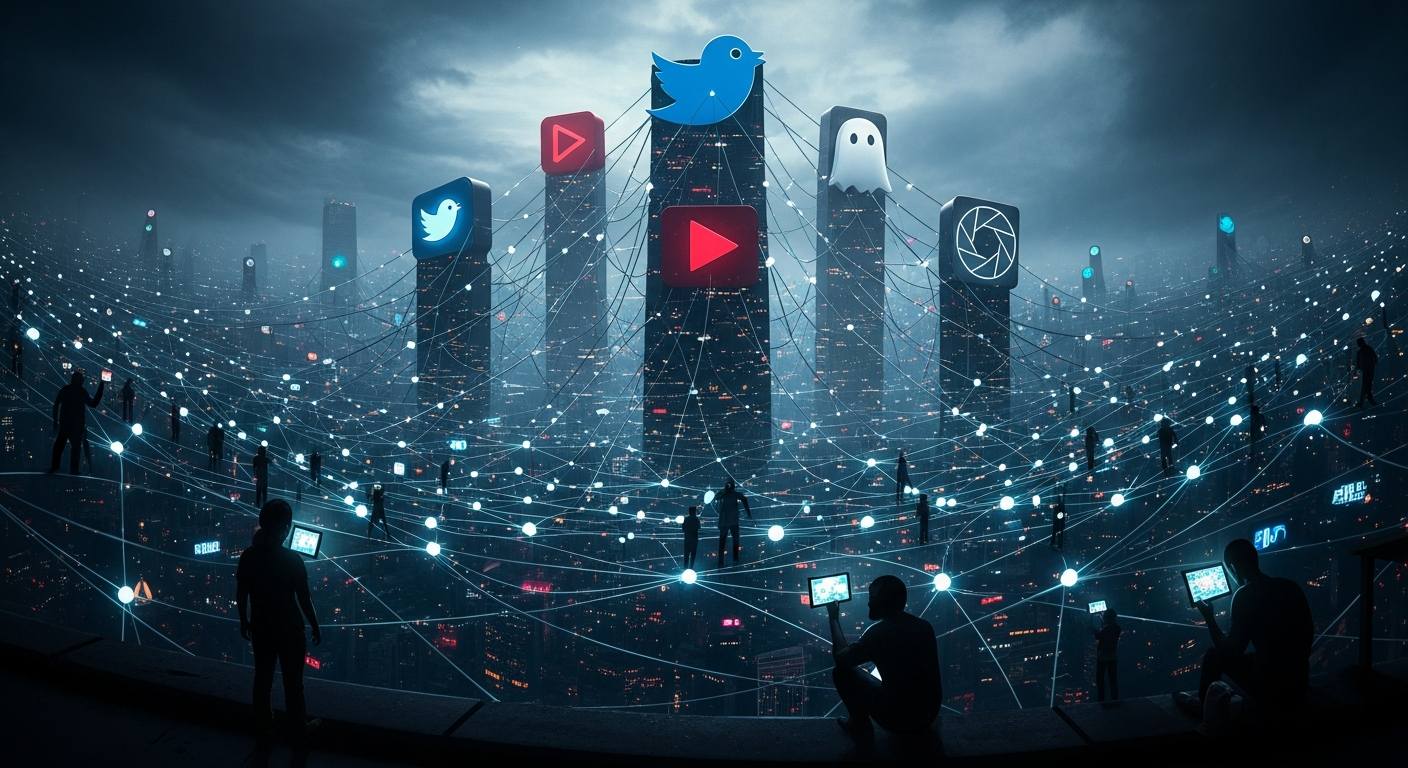
Social media companies like Facebook (Meta), Twitter (X), Instagram, and TikTok connect billions of people and have reshaped how we communicate and do business. By late 2025 about 5.66 billion social media accounts were active worldwide – roughly two-thirds of the global population. People now spend about 18.6 hours per week on these apps. This immense reach means social networks have enormous influence: they make it easy for families to stay in touch and for customers to find businesses online. For example, small shops or startups can launch ad campaigns for just a dollar with a credit card. In short, social media firms have created powerful new tools for advertising and connection. At the same time, experts warn this power comes with challenges – from privacy risks to the spread of misinformation.
Helping Businesses and Brands
Social platforms have become game-changing marketing tools. They let any company, big or small, reach the right customers with very low budgets. For example, Facebook’s ads system is self-serve with low entry barriers (sometimes just $1). This helps startups and small businesses target only the users most likely to be interested in their products. In practice, these tools drive engagement and growth. As one marketing guide notes, social media can “drive audience engagement, generate leads and boost conversions”. Companies post content and respond to customers in real time, building trust and loyalty. Meta (Facebook) reports that 10 million businesses now advertise on its platforms, supporting roughly $360 billion in economic activity. Key benefits include:
-
Targeted advertising: Businesses can micro-target ads to users based on interests, location or behavior. Even a $1 ad spend can reach thousands of users.
-
Audience engagement: Social media drives customer interaction. Posts and ads bring in leads and sales, and companies can gauge customer reactions instantly.
-
Brand building and trust: Quick, transparent responses on social media build customer loyalty. Research notes that timely engagement helps brands maintain trust and credibility at scale.
-
Measurable results: Advertisers can track exactly which posts lead to sales. In fact, Facebook’s tracking tools let businesses see which ads generated orders, making marketing dollars more efficient.
-
Huge scale: By making ads affordable and measurable, social media supports billions of dollars in commerce. For context, online ads are about 63% of the $770 billion global ad market, and platforms like Facebook and YouTube take a large share of that market.
Fueling the Digital Economy
Social media companies are not just platforms – they are massive businesses that contribute to the economy and create jobs. Analysts estimate that social media ads inject on the order of $50 billion per year into the global economy. The industry’s profits and advertising spending have grown rapidly: for example, Meta (Facebook’s parent) now has enormous cash reserves and invests heavily in new tech (over $10 billion per year into AI and virtual reality). Importantly, social media has created new jobs and industries. Companies hire social media managers, digital marketers, data analysts, community moderators, and more. There is even a whole creator economy of influencers and content makers. In fact, experts predict the influencer/creator industry will be worth around $480 billion by 2027. Key economic impacts include:
-
Economic boost: The social media industry adds tens of billions to GDP every year. Advertising revenue circulates through tech, marketing and retail sectors.
-
New jobs: Many new roles exist because of social media – from digital content creators to customer service agents. Research notes a “wide variety” of jobs in digital marketing, content creation and platform management.
-
Innovation investment: Social platforms fund cutting-edge projects. For example, Meta’s huge investments in AI and virtual reality aim to drive future tech growth.
-
Creator economy: Ordinary people can earn income by creating content. Platforms share ad revenue with creators (though often small amounts), leading influencers to diversify with brand deals and e-commerce. This new media industry (from YouTube stars to TikTok creators) contributes significantly to online commerce.
Shaping News and Politics
Social media companies now shape how we get information and even how societies operate. A growing share of people get news from social apps. For example, in 2024 about 20% of U.S. adults said they regularly get news on TikTok. Other apps like Facebook, Twitter and Instagram are also major news sources. This broad reach has two sides:
-
Media disruption: As consumers spend attention on apps, traditional news outlets have lost advertising revenue. Ad budgets have shifted from TV and print to digital channels like social media. In fact, studies show Facebook and YouTube together distribute vast amounts of user-generated news content, forcing newspapers and TV networks to adapt their business models.
-
Political influence: Social platforms play a big role in politics. Targeted political ads and viral posts can sway opinions and elections. For instance, analysts estimate that ad campaigns on Facebook helped influence the UK’s Brexit vote (a decision with an estimated 6% impact on UK GDP). Polls find that 72% of Americans believe social media companies have too much power and influence in politics. People across the political spectrum agree these platforms can heavily shape public discourse.
-
Global reach: Social media lets news and ideas spread instantly worldwide, which can aid activism and awareness but also allow rumors to spread. This is why governments from the U.S. to the EU and India are asking social media companies to monitor disinformation and hate speech more closely.
Challenges: Privacy, Misinformation and Trust
The same features that give social media power also create problems. These platforms run on user data and attention. In fact, most of their revenue comes from converting our personal data and time into ad sales. Because they aim to maximize engagement, algorithms tend to amplify sensational or divisive content that keeps people clicking. This “attention economy” can unintentionally spread misinformation and polarizing posts. Other concerns include:
-
Data privacy: Social networks gather huge amounts of personal data (through tracking cookies, app usage, etc.) to fuel advertising. Users rightly worry about how this data is used or shared.
-
Scams and fraud: Low-cost ads and broad reach also empower scammers. In 2021 alone, Americans lost about $770 million to fraud schemes run through social media. Personal information (even profile details) can be misused by bad actors.
-
Trust issues: Many people are skeptical of social platforms. A recent survey found 75% of Americans do not trust social media companies to make fair decisions about what content is allowed. People worry about bias in content moderation and excessive corporate power. In general, only a small minority think social media’s overall effect is good for society, even though many appreciate personal benefits.
-
Regulatory pressure: Because of these issues, regulators are stepping in. Governments worldwide are examining how to protect privacy, fight disinformation and ensure fair competition among the big tech firms. This means social media companies face more scrutiny than ever before.
Conclusion
In summary, social media companies have a huge impact on businesses, culture and the economy. They offer unprecedented tools for reaching customers, building brands and creating new jobs. At the same time, their massive reach brings responsibilities: handling user data carefully, curbing misinformation, and being accountable to the public. For business professionals, the key is to use social media wisely (focusing on authentic engagement and clear value) while staying aware of the downsides. By understanding both the benefits and risks, companies and individuals can harness the power of social networks for growth, while pushing for transparency and safety in these platforms.