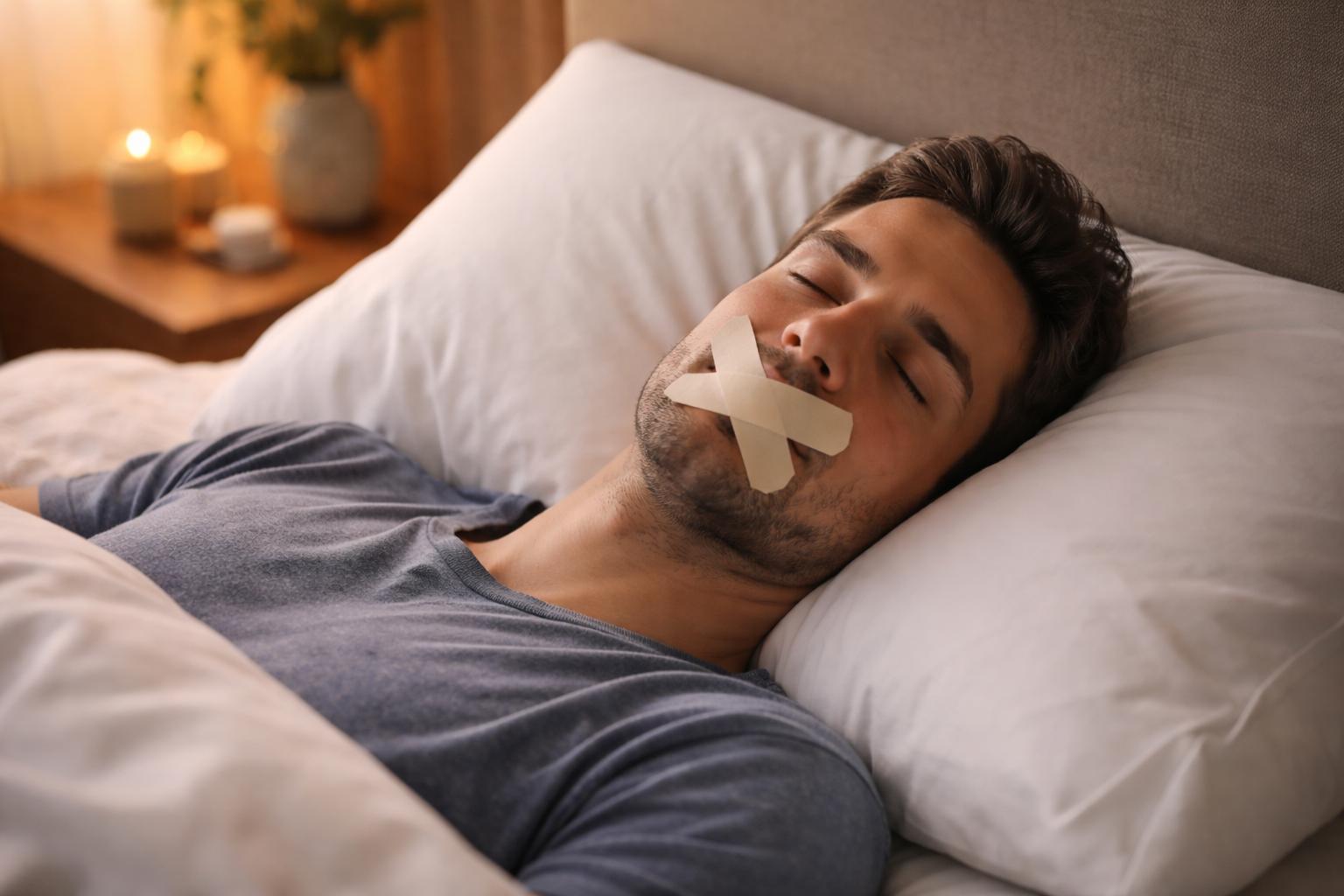
If you keep waking up with a dry mouth, a scratchy throat, or sleep that never really feels restful, there’s a decent chance mouth breathing is the culprit. A lot of people are figuring this out and turning to mouth tape as a simple overnight fix. But if you’ve ever tried a tape that left your skin red, pulled uncomfortably on the way off, or just felt wrong on your face, you’ll know that not all of them are worth bothering with. That’s exactly why more people are choosing to buy gentle mouth tapes that prioritize skin-friendly materials and a comfortable, secure hold through the night.
That’s where gentle mouth tapes come in. And the difference is bigger than you’d expect.
What Makes One Tape Gentler Than Another?
It mostly comes down to three things: the adhesive, the material, and how the whole thing is designed.
The adhesive does most of the heavy lifting here. Harsh adhesives grip aggressively, which sounds fine in theory until you’re peeling something off your face at 7am and taking half your skin barrier with it. Gentle tapes use low-tack formulas, usually hypoallergenic acrylic or silicone based, that hold well enough to stay put all night but come away without a fight in the morning.
The material is about how it actually feels to wear. Stiff or plasticky tape bunches up, pulls as you move in your sleep, and generally makes you aware of it all night. Softer materials like cotton, medical grade silicone, or flexible polymer blends move with your face rather than against it. Some even have skin-friendly ingredients like aloe or vitamin E built in which is a nice touch.
The design matters more than people give it credit for. Full coverage works well for most people but some designs sit around the outside of the mouth rather than directly on the lips, and a lot of people find that less claustrophobic, especially when they’re just getting started.
Who Really Needs to Pay Attention to This?
Honestly most people would benefit from a gentler formula, but it becomes genuinely important if your skin runs dry or reactive, if you have eczema or rosacea, if you have facial hair because strong adhesive and facial hair is a painful combination, or if you’ve tried mouth tape before and had a bad experience and assumed it just wasn’t for you.
That last one is worth sitting with. A lot of people write off mouth taping entirely because the first product they tried was low quality. The concept wasn’t the problem, the tape was.
What to Actually Look For When You’re Buying
Hypoallergenic labelling is the first thing to check. It means the adhesive has been formulated to reduce the chance of reactions. If you’ve ever reacted to plasters or adhesive bandages on your skin, this isn’t optional for you, it’s a baseline requirement.
Latex free is worth checking too. Latex sensitivity is more common than most people realise and you really don’t want to find out the hard way that you have it by sticking something on your face every night.
Breathable or porous construction is something that gets overlooked. Some tapes have tiny perforations that allow a small amount of airflow through the material. This sounds minor but for anyone who feels anxious about the idea of mouth taping it can make a huge difference to how comfortable the whole experience feels.
A slit or small central opening in the tape is another thing worth looking for if you’re new to this. It means you can still get a little air through your mouth if you need to during the night. It’s basically a safety net that makes the whole thing feel a lot less scary.
How to Use It Without Irritating Your Skin
Do a patch test before your first night. Stick a small piece on your wrist or forearm for about half an hour and see how your skin responds. If nothing happens you’re likely fine.
Start with a smaller strip rather than covering your whole mouth. A single horizontal piece across the centre of your lips is enough to encourage nasal breathing without maximising the surface area that could potentially react.
Apply it to clean dry skin and skip the lip balm beforehand. Any oil or moisture on your lips will reduce how well the tape sticks and it’ll probably fall off by 2am which defeats the point entirely.
In the morning, wet the edges a little before you peel it off. Warm water or even just a damp finger along the border of the tape helps the adhesive release without dragging. Never just rip it straight off.
And if your nose is at all congested, whether from allergies, a cold, or anything structural, leave the tape for a night when you can breathe freely through your nose. You need a clear nasal airway before you cover your mouth. That part is non-negotiable.
Does It Actually Do Anything?
For people who mouth breathe out of habit rather than necessity, yes it genuinely can. Better nasal breathing overnight means better oxygen delivery, less snoring for people whose snoring is nose or mouth related, no more dry mouth in the morning, and sleep that feels more like actual rest.
It’s not a cure for everything though. If you have sleep apnea please talk to a doctor before trying mouth tape. Covering the mouth without addressing what’s happening in your airway is not the right move for that situation.
For everyone else, a few weeks of consistent use tends to be when people really notice the difference. The first night feels a bit weird. By the end of the first week most people stop thinking about it entirely.
Conclusion
If mouth breathing is messing with your sleep, gentle mouth tape is a genuinely low effort thing to try. Just make sure what you’re buying is actually made for sensitive skin, uses a proper hypoallergenic adhesive, and is comfortable enough that you’ll actually keep using it.
Start slow, do the patch test, give it a few nights. Most people are pretty surprised by how quickly it starts to feel normal, and even more surprised by how much better their mornings feel.
FAQs
Q1. Is it safe to sleep with mouth tape every night? Yes, it is safe to use gentle mouth tape every night as long as your nasal airway is clear and you have no underlying breathing conditions.
Q2. What happens if my nose gets blocked while wearing mouth tape at night? Most gentle mouth tapes allow you to open your mouth with mild effort, and some include a small breathing slit for added safety.
Q3. Can mouth tape help reduce snoring? Yes, mouth tape can help reduce snoring caused by mouth breathing by encouraging quieter, more controlled airflow through the nose.
Q4. How do I know if a mouth tape is suitable for sensitive skin? Look for tapes labeled hypoallergenic, latex-free, and always do a quick patch test on your wrist before applying to your face.
Q5. How long does it take to get used to sleeping with mouth tape? Most people adjust within three to seven nights, especially when starting with a small, flexible strip rather than full lip coverage.